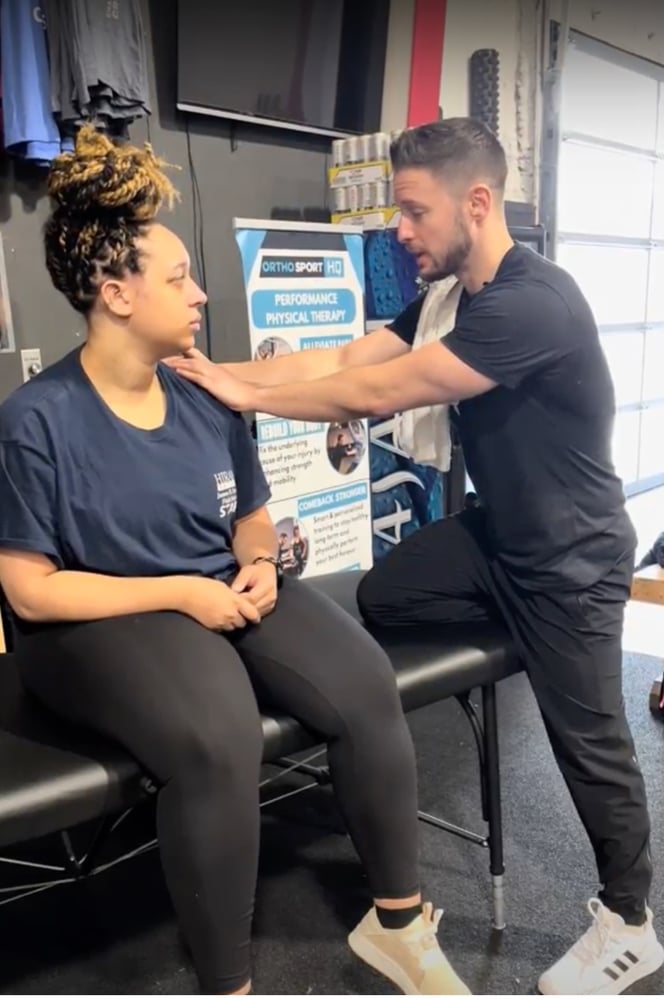
Recovery for high school athletes & their parents
Recover like a pro.
Stay fresh. Stay in the lineup.
Practices, games, weekend tournaments, repeat. In 30 minutes, our sports medicine team uses the same recovery tools the pros use, so your athlete stays healthy and on the field.
- Shockwave therapy
- Dry needling
- Active Release Techniques
- 30 minutes, after practice
Your recovery starting lineup
Fig. 01Sound familiar?
The season is long. Their body keeps score.
The arm is barking after the doubleheader.
Shoulder tight, elbow cranky, and another game on Thursday.
Practice. Game. Tournament. Repeat.
There's no off-season anymore. Their body never gets a chance to catch up.
That tight spot won't go away.
Hamstring, calf, low back. Stretching and the foam roller aren't cutting it.
Parents: you see them push through it.
They won't tell the coach. You want them healthy, confident and playing their best.
Practice breaks them down. Recovery builds them back.
The best athletes don't just train harder. They recover smarter, so they show up fresh when it counts.
Fig. 02 · The specialty tools
Tools you won't find at the gym.
Anyone can stretch you or put cups on your back. These tools take advanced training. They're proven, they're not gimmicks, and they're what make our sessions different.
Shockwave therapy
A handheld device sends pulses of sound waves through the skin into stubborn, nagging spots. No needles and no downtime.
- Feels like
- Rapid tapping. We adjust the intensity to what feels right.
- Great for
- Nagging tendon pain in the shoulder, elbow, knee, heel and hamstring
- Why athletes like it
- Quick, focused treatment that fits into a 30-minute session
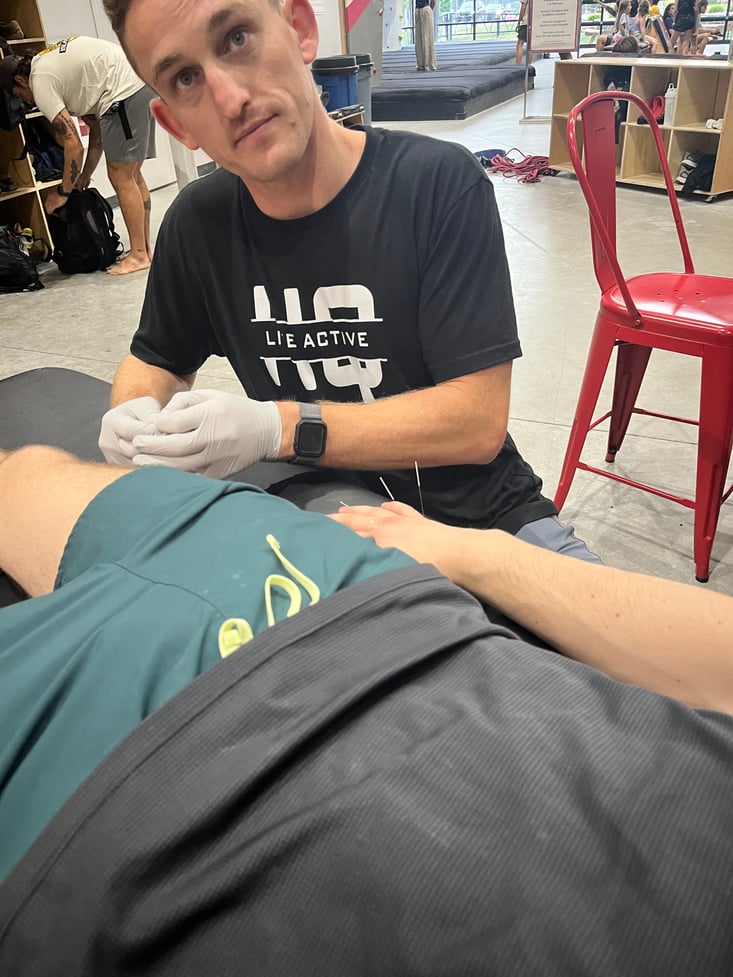
Dry needling
A very thin, sterile needle goes straight into a tight knot in the muscle, a spot hands can't fully reach. The muscle twitches, then lets go.
- Feels like
- A quick twitch or dull ache, then release
- Great for
- Stubborn knots in the shoulder, upper back, hamstrings, calves and hips
- Who does it
- Only clinicians with specialized dry needling training

Active Release Techniques (ART)
Your clinician holds precise pressure on a muscle while you move it through its range, helping stuck layers of tissue slide freely again.
- Feels like
- Firm pressure and a deep stretch that releases as you move
- Great for
- Tight shoulders, hips, hamstrings and forearms that limit how you move
- Who does it
- Dustin Kaplan, a full-body certified ART provider
Also in the toolbox

Hands-on work to loosen up overworked muscles.
Deep stretches that are hard to do on your own.
Warmth and gentle stimulation to wind down.
Fig. 03 · Your recovery team
Skills you can't get just anywhere.
Dr. David Ryland
- Board-Certified Orthopaedic Clinical Specialist, American Board of Physical Therapy Specialties
- Fellow of the American Academy of Orthopaedic Manual Physical Therapists
- Fellowship-trained manual therapy specialist
In plain EnglishAdvanced, hands-on training that very few physical therapists ever complete.
Dustin Kaplan
- Full-body certified Active Release Techniques (ART) provider
- Athletic trainer and licensed massage therapist
- Certified Strength & Conditioning Specialist with Distinction; 8 years as Ohio NSCA State Director
In plain EnglishCertified in ART for every region of the body, with years of sports medicine experience.
Justin Jakopic
- Licensed Physical Therapist Assistant
- Loves working with baseball players and overhead athletes
- Shoulder and arm care through the season
Ask for Justin ifYou're a pitcher, catcher, position player or any overhead athlete.
Fig. 04 · Arm care for throwers
Built for baseball arms.
A throw starts at the feet and ends at the fingertips. When one link gets tight, the shoulder and elbow pick up the slack. We look at the whole chain.
- 4ShoulderTightness in the back of the shoulder after throwing
- 5Elbow & forearmOverworked forearm muscles after high pitch counts
- 3Shoulder bladeUpper back muscles that control and protect the arm
- 1Hips & trunkTight hips steal power and push stress up the chain
Fig. 05 · How it works
In after practice. Out in 30.
Book online
Book online in about a minute, or call 330-577-3640 and we'll book it for you. We start on time, so it fits around practice.
Quick screen
How's the season going? A fast movement screen shows us where to focus.
The right tool
Shockwave, dry needling, ART or hands-on work, matched to what's tight today.
Back to it
Leave with one recovery tip for the week and an easy way to book the next one.
Fig. 06 · When to book
A high school athlete's week.
An example in-season week with two games and a weekend tournament. We'll help you find the right rhythm for your athlete's schedule.
30 Min
Fits after practice or before a game
3 Pro Tools
Shockwave, dry needling and Active Release Techniques
On Time
We start when we say we will. Busy families need that.
Fig. 07 · Who it's for
Every sport. Every season.
For parents
Keep your athlete healthy all season.
You want your child confident, healthy and playing their best, not playing through pain. Here's our promise to you as a parent.
- 1We start on timeYou've got three kids and two practices tonight. We get it.
- 2We tell you what we foundPlain-English updates on what's tight and what we did about it.
- 3We'll be straight with youIf it looks like more than recovery, we'll tell you and point you to the right next step.
Fig. 09 · Recovery or rehab?
Sore, or something more?
If we see something that needs more than recovery, we'll tell you right away and explain the next step.
Tight & tired
- Sore and stiff after games and practice
- Tight spots that slow them down
- Want to feel fresh for the next game
Something's not right
- Pain that lingers or keeps coming back
- Pain that changes how they throw, run or move
- A specific injury, like a sprain, strain or tear
Fig. 10 · Questions parents ask
Good questions.
What is shockwave therapy?
A handheld device sends pulses of sound waves into stubborn, nagging spots like tendons. It feels like rapid tapping, there are no needles, and we adjust the intensity to what feels right.
Does dry needling hurt?
The needles are very thin, so most athletes feel a quick twitch or a dull ache rather than a sharp poke. It's only performed by clinicians with specialized training, and only when it's the right tool.
Is it right for a high school athlete?
We screen every athlete first and choose the right tool for their age, sport and what we find. For athletes under 18, we talk it through with a parent before using any specialty tool.
How often should my athlete come in?
It depends on their schedule. Many athletes come in during the heaviest part of the season, around tournaments and playoffs, or between pitching outings. We'll help you find a rhythm that works.
Can I book for my athlete online?
Yes. Book online in about a minute, or call us at 330-577-3640 and our front desk will set it up for you.
What should they wear?
Practice clothes are perfect. Shorts and a t-shirt or tank top so we can reach the areas we're working on.
Is this only for kids?
Not at all. Adults who train hard book recovery sessions too, and PT patients can add them to their plan.
Your next step
Stay fresh. Stay in the lineup.
Book a 30-minute recovery session and get your athlete ready for the next game. Questions first? Call 330-577-3640.